The history of jeans is the story of a garment that began as humble workwear for American miners and evolved into the most ubiquitous piece of clothing in human history. Today, an estimated 2 billion pairs of jeans are produced annually, and there is virtually no country on Earth where blue jeans are not worn. This remarkable journey from California gold mines to global fashion icon spans nearly 150 years and touches on industrialization, counterculture, and the democratization of fashion.
The Gold Rush Birth
In 1873, Levi Strauss, a Bavarian immigrant working as a dry goods wholesaler in San Francisco, partnered with tailor Jacob Davis to patent a new kind of work pant reinforced with metal rivets at stress points. The pants were made from denim, a sturdy cotton twill fabric that had been used for workwear for decades. The patent, which covered 'an improvement in fastening pocket openings,' was granted on May 20, 1873 - a date now celebrated as the birthday of blue jeans. The first jeans were produced for miners, who needed pants that could withstand the demanding conditions of gold mining.
From Workwear to Uniform
Throughout the late nineteenth and early twentieth centuries, jeans remained solidly working-class garments, worn by miners, farmers, railroad workers, and cowboys. The Great Depression saw jeans become even more widespread as people sought durable, affordable clothing. During World War II, jeans were declared 'essential' by the U.S. government and were sold only to people engaged in defense work. This wartime designation introduced jeans to a new generation of workers and set the stage for their post-war transformation.
The Rebel Yell
The 1950s saw jeans transform from workwear into a symbol of youth rebellion. Movies like 'Rebel Without a Cause' starring James Dean in jeans and a red jacket cemented denim's association with teenage defiance. Schools and restaurants banned jeans, which only made them more desirable to young people. This tension between authority and rebellion became a defining theme of denim culture that would persist for decades.
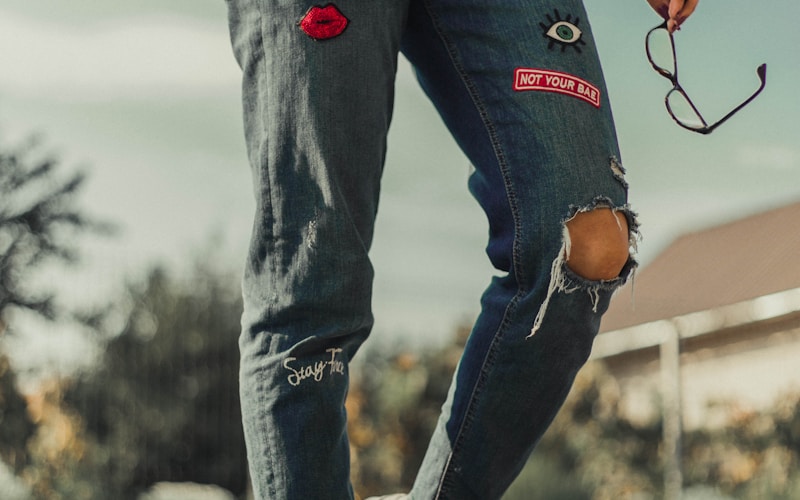
Jeans are the great equalizer. They are worn by presidents and prisoners, billionaires and bus drivers, supermodels and steelworkers. No other garment in human history has crossed so many social boundaries.
Denim Goes High Fashion
The 1970s and 1980s saw jeans make the leap from casual wear to high fashion. Designer jeans, led by brands like Calvin Klein, Gloria Vanderbilt, and Jordache, transformed denim into a luxury item. For the first time, people paid premium prices for jeans with designer labels. The 1990s brought the peak of denim culture with the rise of premium denim brands that commanded prices of 200 dollars or more per pair. This era also saw the emergence of distinct denim subcultures, from the raw denim enthusiasts who obsess over fade patterns to the vintage collectors who seek out rare Levi's models.
Modern Denim Culture
Today, jeans are more diverse than ever. The range of fits includes skinny, straight, bootcut, boyfriend, mom, wide-leg, flare, and hundreds of variations. Wash treatments range from raw (unwashed) to heavily distressed, with acid wash, stone wash, and enzyme wash techniques creating different aesthetic effects. Sustainability has become a major focus, with consumers demanding jeans produced with less water and fewer chemicals. The global denim market exceeds 100 billion dollars annually, and jeans remain the single most important item in the global wardrobe.
Did You Know?
A single pair of conventional jeans requires approximately 1,800 gallons of water to produce, from cotton farming to final finishing. This has led to a growing movement toward sustainable denim production, with some manufacturers now producing jeans using 90 percent less water.