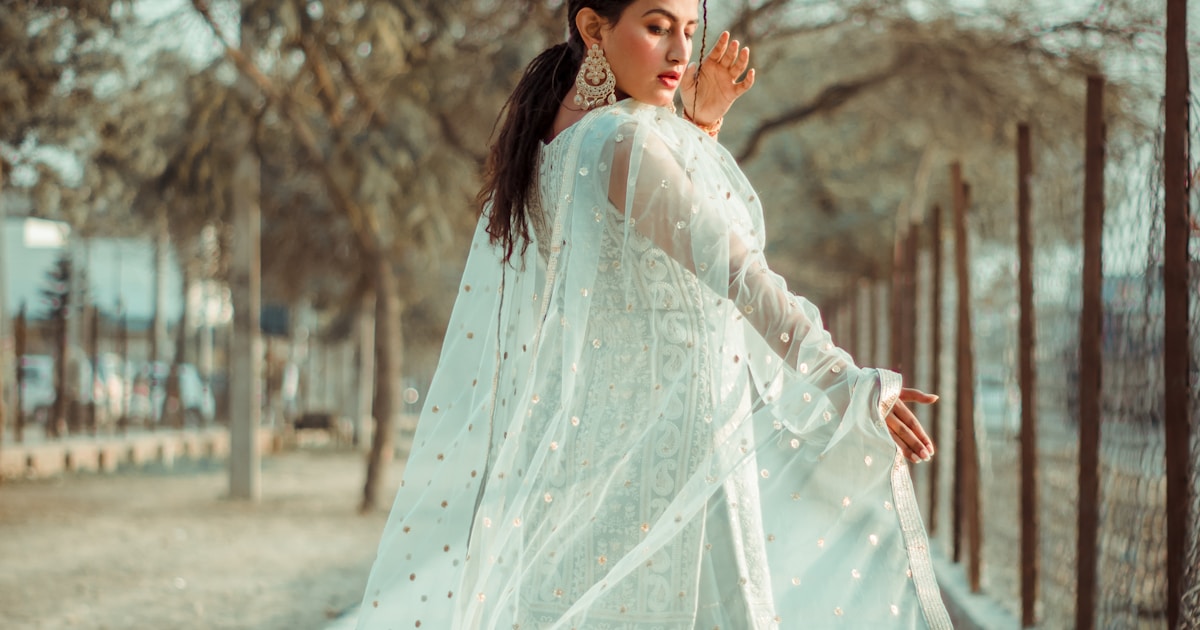
Buyei clothing is distinguished by exquisite batik dyeing techniques and finely detailed indigo textiles. Women wear beautifully pleated skirts with batik patterns and intricately embroidered jackets.
Key Features of Buyei Attire
- Masterful batik (laran) wax-resist dyeing on indigo fabric
- Pleated batik skirts with concentric spiral and floral patterns
- Silver-studded embroidered aprons tied at the waist
- Right-opening jackets with embroidered collar and cuff bands
- Handwoven cotton fabric as the foundation of all garments
Traditional Garments
Women wear long-sleeved, right-opening jackets in indigo blue or black, with embroidered trim at collars and cuffs, over pleated batik skirts reaching below the knee. A heavily embroidered apron with silver studs covers the front. Men wear blue or black front-fastening short jackets with wide-leg trousers.
Headwear and Adornments
Women wrap their hair in black cloth or embroidered headbands. Unmarried women often wear a distinctive headscarf with batik patterns and embroidered ends.

Embroidery and Decorative Arts
Buyei embroidery features floral and butterfly motifs in bright colors, typically executed on aprons, belt ends, and headwear, often combined with silver ornaments.
Ethnographers consider Buyei batik among the most technically refined in China, with some patterns requiring up to seven separate wax-resist applications before the final indigo immersion.
Color Symbolism
Indigo blue is the foundational color, with batik patterns in white and light blue. Embroidery adds vibrant red, yellow, green, pink, and purple accents.
Festival Attire
During the Sixth Month Festival and Spring Festival, women wear their finest deeply dyed indigo batik skirts, most elaborately embroidered jackets, and full sets of silver jewelry.
Modern Influence and Preservation
Buyei batik has gained recognition as an intangible cultural heritage, with textiles increasingly featured in interior design and ethnic-inspired fashion.
Did You Know?
The Buyei have a saying that a woman without batik skills cannot find a husband - traditionally, mastery of wax-resist dyeing was considered an essential domestic art for every Buyei woman.