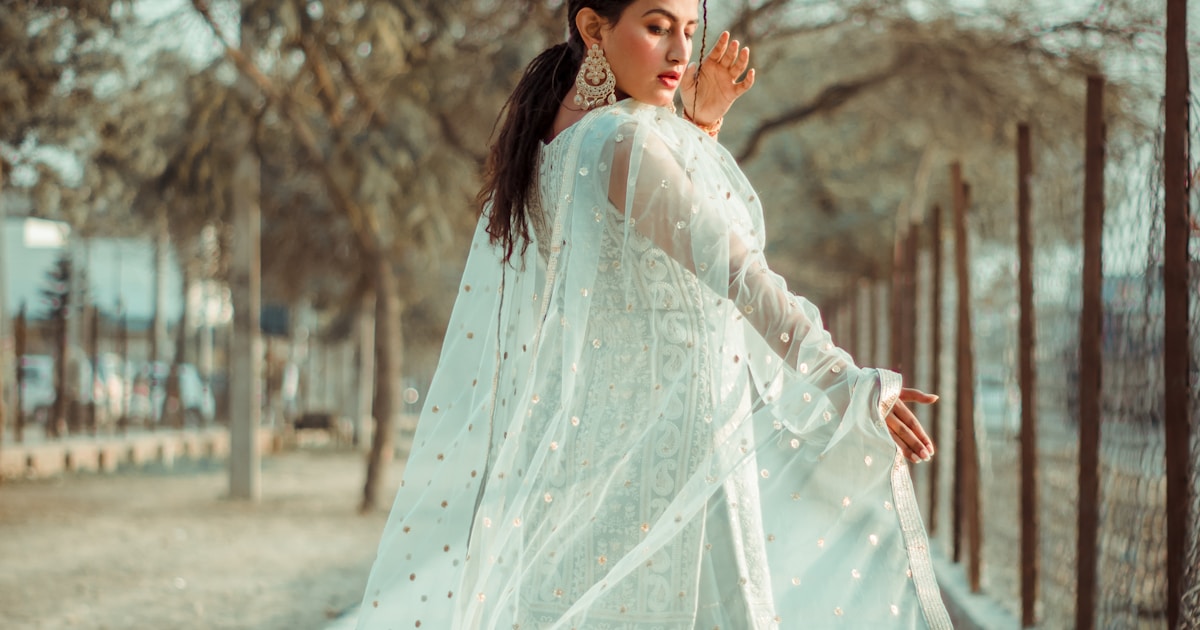
Bonan attire blends Islamic modesty with Central Asian and Chinese influences, featuring long robes for men and brightly colored headscarves for women. Embroidered floral patterns on collars, cuffs, and chest panels are a hallmark.
Key Features of Bonan Attire
- Long single-breasted robes for men with embroidered chest panels
- Womens brightly colored headscarves in green, pink, and white
- Floral embroidery on collar edges, cuffs, and chest panels
- Silver and jade buttons on mens formal overcoats
- Leather boots for men as part of full ceremonial dress
Traditional Garments
Men wear long robes or short jackets with cloth buttons over white shirts, with a distinctive embroidered chest panel, paired with loose trousers and leather boots. Women wear collarless jackets with long trousers under a long robe or tunic, always with a headscarf.
Headwear and Adornments
Women wear headscarves in different colors by age: green or pink for young women, white for older women. Men wear white or black skullcaps.

Embroidery and Decorative Arts
Bonan embroidery features delicate floral patterns on collars, cuffs, chest panels, and headscarf edges. Peonies, plum blossoms, and geometric borders are common motifs.
Like their Dongxiang neighbors, the Bonan people maintain that the most intricate embroidery on a womans headscarf edge is a silent testament to her patience and domestic virtue.
Color Symbolism
Dark blues, blacks, and grays for base garments, with bright green, pink, red, yellow, and white in embroidery and headscarves.
Festival Attire
During Eid al-Fitr and Eid al-Adha, men wear new long robes with the finest embroidered chest panels, while women wear their most beautiful headscarves and fully embroidered tunics.
Modern Influence and Preservation
Bonan embroidery is recognized as an intangible cultural heritage practice in Gansu.
Did You Know?
The Bonan people are famous for their handmade waist knives (baoan yao dao), which are renowned across northwestern China and traditionally worn as part of formal attire.