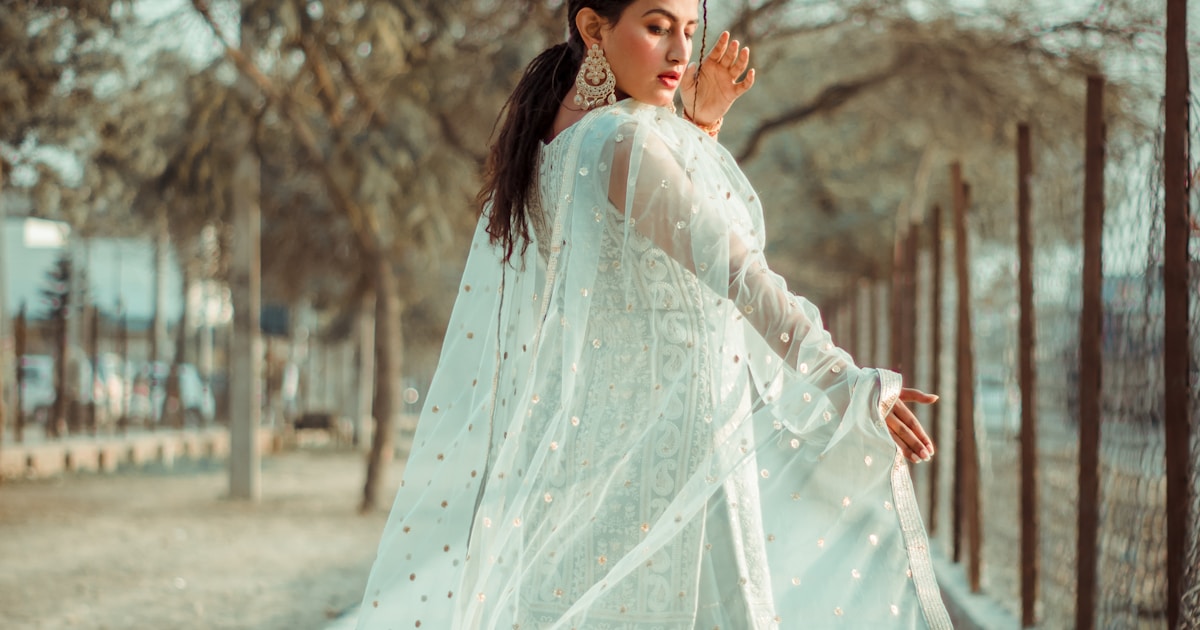
Bai clothing is renowned for its pristine white fabric as the primary color, symbolizing purity and virtue. The attire is richly accessorized with intricate embroidery, silver ornaments, and a distinctive phoenix-shaped headdress for women.
Key Features of Bai Attire
- White as the dominant base color symbolizing purity
- Phoenix-shaped headdress (fengguan) for women with floral embroidery
- Silver butterfly-shaped clasps on capes and collars
- Embroidered apron with colorful floral patterns
- Seven-streamer waistband (qiyaodai) with intricate tassels
Traditional Garments
Women wear a white tunic as the innermost layer, covered by a pink, blue, or purple sleeveless jacket, secured with a silver chain. An embroidered apron is tied at the waist with colorful tasseled streamers. Men wear white shirts with black or blue front-fastening jackets, loose trousers, and a cloth belt.
Headwear and Adornments
Unmarried Bai women wear a distinctive headpiece featuring a crown-like arrangement with upward-curving ends resembling a phoenix, decorated with floral embroidery and silver ornaments. Married women wear simpler embroidered headscarves. Men wear white or blue cloth head wraps.
Embroidery and Decorative Arts
Bai embroidery is exceptionally refined, featuring butterflies, flowers, and auspicious birds on aprons, collars, cuffs, and headwear. Satin stitch and split stitch techniques create three-dimensional floral patterns with vibrant color gradients.
Scholars note that the Bai peoples reverence for white extends beyond clothing into their architecture, where whitewashed walls serve as canvases for exquisite ink paintings of landscapes and calligraphy.
Color Symbolism
White dominates as the primary color, with vivid accents of red, green, blue, pink, and purple on embroidered elements. Silver provides metallic contrast as ornamentation.
Festival Attire
During the Third Month Fair (Sanyuejie) and the Raosanling Festival, women wear their most elaborate phoenix headdresses, multi-layered embroidered aprons, and complete silver jewelry sets including necklaces, earrings, and bracelets.

Modern Influence and Preservation
The distinctive white-and-embroidered aesthetic of Bai clothing has become a cultural symbol of Dali tourism, with simplified versions worn by performers and available as souvenirs.
Did You Know?
The custom of wearing white among the Bai people is so deeply rooted that their name in Chinese literally means White People, and the color symbolizes their ideal of moral purity and honesty.